
Freightliner Fuel-Line Repair in Glendive: A Hidden Crack and a Serious Safety Hazard
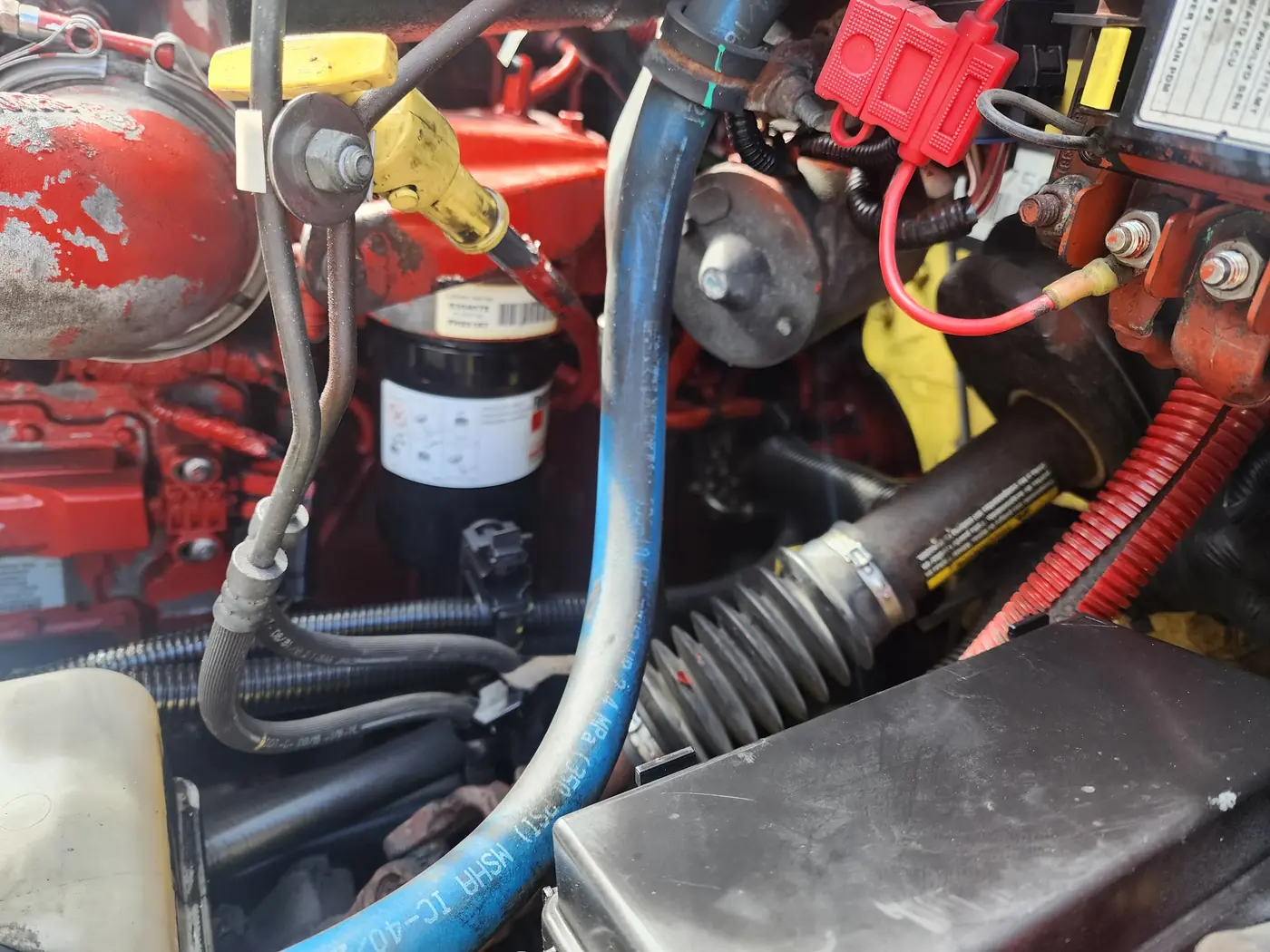
When the engine on this Freightliner was running, diesel fuel was pouring from the engine area.
This was not a minor seep that could wait until the truck’s next scheduled service. A fuel leak near a running diesel engine creates an immediate safety concern, especially when high-pressure fuel-system components are involved.
The truck was shut down and inspected in Glendive. Although the general source of the leak was located, the suspected rigid fuel-supply tube did not show an obvious crack while it remained installed.
Finding the failure required removing the line, inspecting it closely, and testing it away from the running engine.
Why high-pressure fuel leaks are dangerous
Modern diesel fuel systems can operate under extremely high pressure. A damaged line can discharge fuel forcefully or turn it into a fine spray.
High-pressure fuel can penetrate skin and cause a serious injection injury. The wound may initially look like a small cut or pinprick while fuel is driven beneath the skin, where it can cause severe tissue damage.
Any suspected injection injury requires immediate emergency medical attention. It should never be treated as an ordinary cut.
Escaping diesel also creates several other hazards:
- Fuel can contact hot engine or exhaust components.
- Atomized fuel can increase fire risk.
- Spilled diesel creates a slippery work area.
- Fuel can damage surrounding wiring, hoses, insulation, and rubber components.
- A major leak can quickly release a substantial amount of fuel onto the ground.
An active fuel leak should never be located by running a hand along the line. The engine should be shut down, ignition sources controlled, spilled fuel contained, and fuel-system pressure relieved according to the manufacturer’s procedure before components are handled.
Finding a crack that could not be seen
The initial inspection located the suspected rigid fuel tube, but the technician could not visually confirm a crack while the line was still mounted on the engine.
The remaining line retainer was removed, and the tube was taken off the truck for closer inspection. Once removed, the line was tested using controlled air pressure and soapy water.
Escaping air produced bubbles at the damaged area, revealing a hairline crack that had been difficult to see.
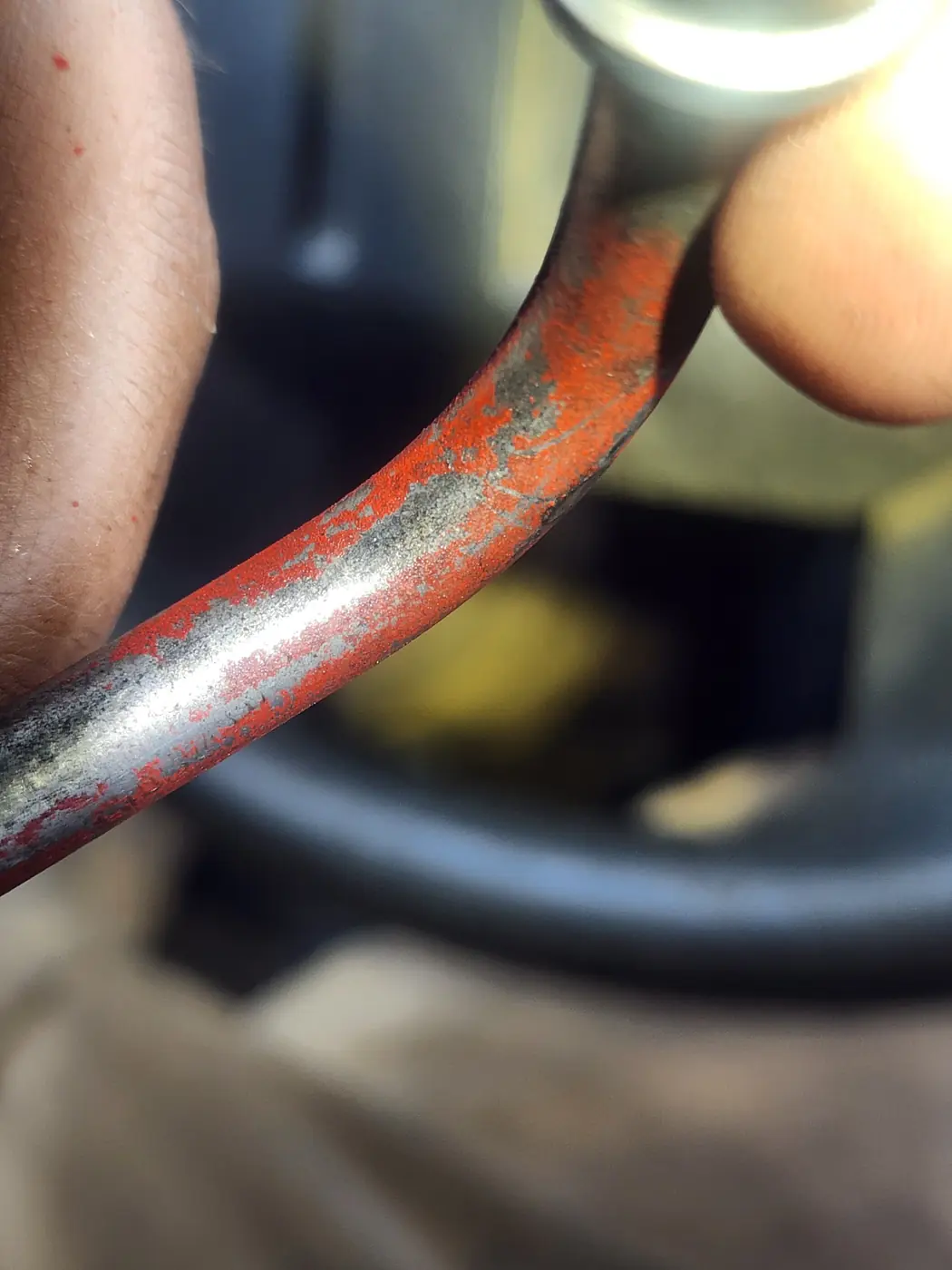
This was an important diagnostic step. Continuing to run the engine while searching for a high-pressure fuel leak would have created unnecessary risk. Removing and testing the tube separately allowed the failure to be confirmed under controlled conditions.
Why visual inspection was not enough
A hairline crack in a rigid fuel tube may be concealed by paint, dirt, corrosion, restricted access, or the crack’s position against another component.
The opening may also be small enough that it is difficult to identify when the engine is shut down and the fuel system is no longer operating. That does not mean the leak is minor. As this repair demonstrated, a line that appears intact can release a large amount of fuel once the engine is running.
The service documentation did not establish what originally caused this particular crack. Engine movement, vibration, temperature changes, mounting stress, or previous work can affect rigid lines, but assigning a cause without evidence would be speculation.
What the testing established was clear: the tube had failed and required replacement.
The available replacement line did not match
A replacement line from another engine was initially evaluated. Although it appeared similar, it did not match the failed tube.
Work stopped instead of attempting to bend, modify, or force the incorrect tube into position.
That was the correct decision. Rigid fuel tubes are manufactured with specific:
- Lengths
- Bend locations
- Connection angles
- Mounting tabs
- Bracket locations
- Clearances around other components
Two lines may use similar fittings while following different routes across the engine. Forcing a mismatched line into place can preload the tube or its fittings before the engine is even started.
An incorrect line may also contact another component, prevent its support brackets from lining up, or place excessive stress near a connection. On a high-pressure fuel system, those are unacceptable risks.
The repair was paused until the correct fuel-supply tube was available.
Preparing for the correct installation
Before installing the correct replacement line, the fuel-line ports were cleaned. The primary fuel filter was temporarily removed to provide the access needed for installation.
The new tube was positioned and connected without forcing it into place. Its holding bolts and support brackets were installed, including a previously missing bolt.
A loose dipstick tube was also found and secured during the repair.
The service record does not establish that the missing fuel-line support bolt caused the crack. However, restoring that hardware was still important. Rigid lines depend on their retainers and brackets to maintain the correct position and control unwanted movement.
A complete repair should restore the surrounding supports and fasteners instead of installing a new component while leaving obvious mounting problems uncorrected.
Filters, oil, and operational checks
After the replacement tube was installed, the fuel-line connections were torqued. The fuel filter and fuel-water separator were replaced, and the engine oil was drained and refilled as part of the documented service.
The engine was then operated and checked. Stored codes were cleared, and the completed work order documented the truck as ready to return to service.
Verification matters on any fuel-system repair. Installing the replacement component is not the end of the process.
The truck must be checked for:
- Active fuel leakage
- Correct line routing
- Clearance from nearby components
- Properly installed retainers and brackets
- Fuel-delivery problems
- Warning lights or returning fault codes
- Reappearance of the original complaint
A clean engine area also makes future inspections easier. Old fuel and residue can make it difficult to tell whether a connection is actively leaking or whether the visible wetness came from an earlier failure.
A second fuel complaint had a separate cause
The driver also reported that the truck’s fuel tanks were not drawing down correctly.
Inspection found the right-side fuel-tank vent hose plugged. This was a separate issue from the cracked engine fuel line.
A fuel tank must exchange air as fuel leaves or enters it. When a vent becomes restricted, the tank can develop abnormal pressure or vacuum. That can interfere with normal tank operation and create what appears to be a fuel-transfer or delivery problem.
Finding the cracked tube did not mean every fuel-related symptom came from the same failure. The tank complaint required its own inspection and produced a different diagnosis.
This is an important part of truck and equipment repair: two symptoms can occur at the same time without sharing the same cause.
Fuel-system warning signs to report immediately
Drivers and fleet managers should report fuel-system concerns before they become a roadside shutdown or safety incident.
Warning signs include:
- Diesel pouring, spraying, or dripping while the engine runs
- A strong diesel odor after the truck has been parked
- Wetness or staining around fuel lines and fittings
- Hard starting after the truck sits
- Intermittent loss of power
- Uneven fuel-level changes between tanks
- A tank that develops unusual pressure or vacuum
- A new vibration or rattle near a fuel-line bracket
- Warning lights or fault codes that return after being cleared
If fuel is spraying or pouring from the engine area, shut the engine down immediately when it is safe to do so. Keep people away from the leak, eliminate ignition sources, and never use your hands to search for the failed component.
Details about when the problem occurs can help shorten diagnostic time. Note whether the symptoms appear with a full tank, after the engine warms up, under load, while climbing a grade, or after sitting overnight.
More than replacing a fuel line
This Glendive repair involved much more than installing a new tube. The work included:
- Shutting down a truck with fuel pouring from the engine area
- Removing the suspected rigid fuel tube
- Testing the tube away from the running engine
- Confirming an almost invisible hairline crack
- Rejecting a mismatched replacement line
- Cleaning the fuel connections
- Installing the correct fuel-supply tube
- Restoring missing mounting hardware
- Securing a loose dipstick tube
- Replacing the fuel filter and fuel-water separator
- Investigating the uneven fuel-tank draw
- Finding the plugged tank-vent hose
- Operating the truck and clearing stored codes
That is equipment-level problem solving: confirm the actual failure, correct related conditions, and avoid creating another problem by forcing the wrong part into place.
Mondak Equipment & Hose provides semi-truck lube, diagnostics, and repair through our Glendive shop. We also provide equipment repair through Glendive and Williston, with mobile equipment service available around Dickinson, Bismarck, and Billings.
If your truck or equipment has a fuel leak, hard-starting problem, uneven tank draw, or another difficult fuel-system complaint, contact Mondak Equipment & Hose for systematic diagnosis and repair.